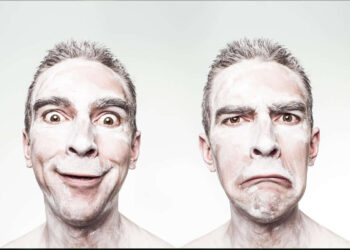
To improve self-esteem, it is necessary to develop the ability to be flexible and open to changes that occur throughout life.
Self-esteem is the set of personal characteristics that an individual uses to describe himself or herself. Depending on personal considerations, self-esteem can oscillate between two poles, a positive one with high self-esteem and a negative one with low self-esteem, obviously the middle position is the desirable one, as the Latins used to say “in medio stat virtus”.
High and low self-esteem
A good level of self-esteem allows us to maintain a state of psychological and physical well-being, which affects cognition, emotions, motivation and behavior.
Low self-esteem is characterized by a feeling of insecurity and inadequacy, anxiety and sadness, caused by thoughts such as: “I am worthless”, “I am not capable of…”, “I am stupid”, “I am incompetent”, etc.
Low self-esteem leads to a constant need to be valued by others. Too high self-esteem is characterized by an excessive sense of security, which can lead the individual to be unaware of his or her own limits.
Sensations
The feeling of self-esteem is influenced by what we think and feel about ourselves and by feedback from the outside world (what people think of us, compliments, etc.).
One of the first studies on self-esteem is that of W. James (1890), according to whom self-esteem corresponds to the relationship between the goals a person wants to achieve and the results obtained. Depending on what a person achieves, his or her self-esteem will be higher or lower.
In recent years, more and more researchers speak of self-esteem in multidimensional terms (Epstein, Harter, Marsh and Holmes, Bracken). There are six areas that influence its development:
- Family
- Professional environment (school/work)
- Emotionality
- Control of the environment
- Interpersonal relationships
- Physical appearance
Good self-esteem is when all areas are sufficiently satisfied. If too much importance is placed on one area in which the person feels deficient (e.g., physical appearance) there may be low self-esteem even though the other areas are satisfied.
People with low self-esteem often show little love for themselves and an inability to recognize their positive qualities. The development over time of critical and self-deprecating thoughts makes these people feel powerless in the face of life’s challenges. This does not allow them to pursue their goals and satisfy their needs.
On the contrary, people who in the face of difficulties and failures stand up and commit to their values and goals develop good self-esteem.
Self-esteem can always be improved
Self-esteem is a characteristic that can always be improved, not only by increasing one’s knowledge, but also by learning new skills.
Important characteristics for improving self-esteem are the ability to be open and flexible to life’s changes, the willingness to experiment with new ways of “doing” and “being” in a creative and purposeful way, the awareness of one’s values (what really makes sense to us) and the commitment to carry them out despite difficulties.